news
17
Haitian Flag Day: Honouring the Legacy of the First Independent Black Republic
May 22, 2026
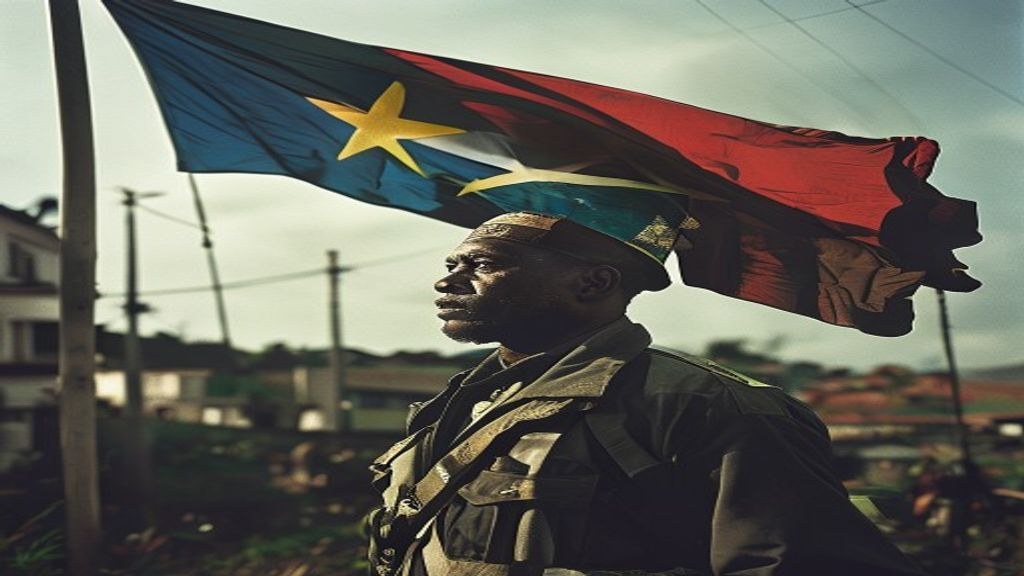
Forget everything you think you know about revolutions – the real game-changer wasn’t France or America, it was a tiny island nation called Haiti, and its story is shockingly relevant to South Africa today. While we were battling apartheid, there was a historical echo resonating from the Caribbean, a reminder that the fight for dignity is universal. This week, the world marked Haitian Flag Day, and it's a story we *need* to be talking about, bru.
## From Slave Rebellion to Sovereign State: How Haiti Pulled Off the Impossible
Look, revolutions are messy. They usually involve posh guys in wigs shouting about rights while the real suffering happens down below. But the Haitian Revolution? That was different. It was a full-on, bottom-up uprising of enslaved people against a colonial power. And they *won*. In 1803, they hoisted that blue-and-red flag – a symbol of defiance, a middle finger to the French empire.
This wasn’t some theoretical exercise in liberty. This was about actual people, ripped from Africa, building a nation from the ground up. They didn't just demand freedom; they *seized* it. It culminated in 1804 with Haiti becoming the first independent black republic in the world. Jislaaik. Imagine the audacity. The sheer kak bravery. It’s a story that makes even a seasoned braai master pause and reflect.
## That Flag, Bru: More Than Just Blue and Red
That Haitian flag isn't just a pretty piece of cloth. It's loaded with meaning. It represents courage, liberation, and a refusal to accept the status quo. It’s a visual shout: “We are here, we are free, and we will determine our own destiny.” The flag was first hoisted high on May 18, 1803. It's a symbol that resonated globally, becoming a beacon of hope for oppressed people everywhere. You can almost see it flying alongside the Springboks’ flag, a symbol of a nation that wouldn't be broken.
## SA & Haiti: More Alike Than You Think?
Minister of International Relations and Cooperation Ronald Lamola reckons South Africa and Haiti share a “common heritage of resilience, resistance and the unwavering commitment to human dignity.” Is he right? I reckon he is. Both nations faced brutal systems of oppression – colonialism and apartheid in our case, slavery and then French domination in Haiti’s. Both fought for their freedom against seemingly insurmountable odds.
South Africa’s transition to democracy in 1994, Lamola points out, became a “beacon of possibility for justice and equality” on the African continent and beyond. But let’s be real, bru. We had international support, sanctions, and a global spotlight. Haiti was largely on its own. That makes their victory even more remarkable.
## Beyond the Waters of Guinea: The Enduring Connection to Africa
Haiti’s story isn’t just about escaping slavery; it's about remembering where they came from. Haitian Ambassador to South Africa Jean Pillard hit the nail on the head: “The people who formed Haiti came from this continent. They carried knowledge, systems, discipline, belief. Those things were not erased. They endured.”
They held onto their African roots, even across the horrors of the transatlantic slave trade. The song “Lòt bò dlo nan Ginen…” (“Beyond the waters, in Africa”) is a testament to that enduring connection. It acknowledges the rupture of the slave trade, the forced separation, but also the unwavering belief that their spirit would return to Africa. It's a powerful reminder that identity isn't something that can be simply erased, even by centuries of oppression. It’s a lekker song, that.
## 2010 Earthquake & Today's Haiti: A Nation Still Fighting
Haiti’s journey hasn’t been easy. The 2010 earthquake was a catastrophe. An estimated 200,000 Haitians died. It laid waste to infrastructure and plunged the nation into even deeper crisis. But even then, the spirit of resilience shone through.
Despite these challenges, Haiti remains fiercely independent. Ambassador Pillard emphasised that Haiti’s pride lies in being a small but sovereign state, “equal in dignity and in responsibility to others and friend to all.” It’s a nation that refuses to be defined by its hardships. It's a reminder that a nation’s worth isn't measured in GDP or military might, but in the dignity and determination of its people. You won’t find that on Takealot.
## Small State, Big Message: Why Haiti’s 'Friend to All' Policy is Befok
Haiti’s “Friend to all. Enemy to none” policy is, frankly, befok. In a world dominated by geopolitical power plays and self-interest, it’s a radical stance. It’s a refusal to be bullied or co-opted. It's a declaration that every nation, regardless of size or influence, deserves respect and equality.
Pillard made it clear: “There are no small states and no large states - only sovereign states, equal in dignity and equal in responsibility.” That's a message that resonates with smaller nations around the world, including South Africa, as we navigate a complex global landscape. It’s a reminder that sovereignty isn’t just a legal concept; it's a fundamental human right.
Haiti’s story is a powerful one. It’s a story of courage, resilience, and the unwavering pursuit of dignity. It’s a story that should be taught in every school in South Africa, alongside the narratives of our own struggle. It’s a story that reminds us that freedom isn’t given; it’s taken. It’s a story that proves that even the smallest nation can change the world.
So, is Haiti's revolution a story we should all be paying attention to? Absolutely. It’s a vital piece of the puzzle, a historical echo that continues to resonate today.
But with all the lessons Haiti offers, are we truly learning from them, or are we destined to repeat the mistakes of the past? Click here to find out how South Africa's foreign policy stacks up against the lessons of the Haitian Revolution.